
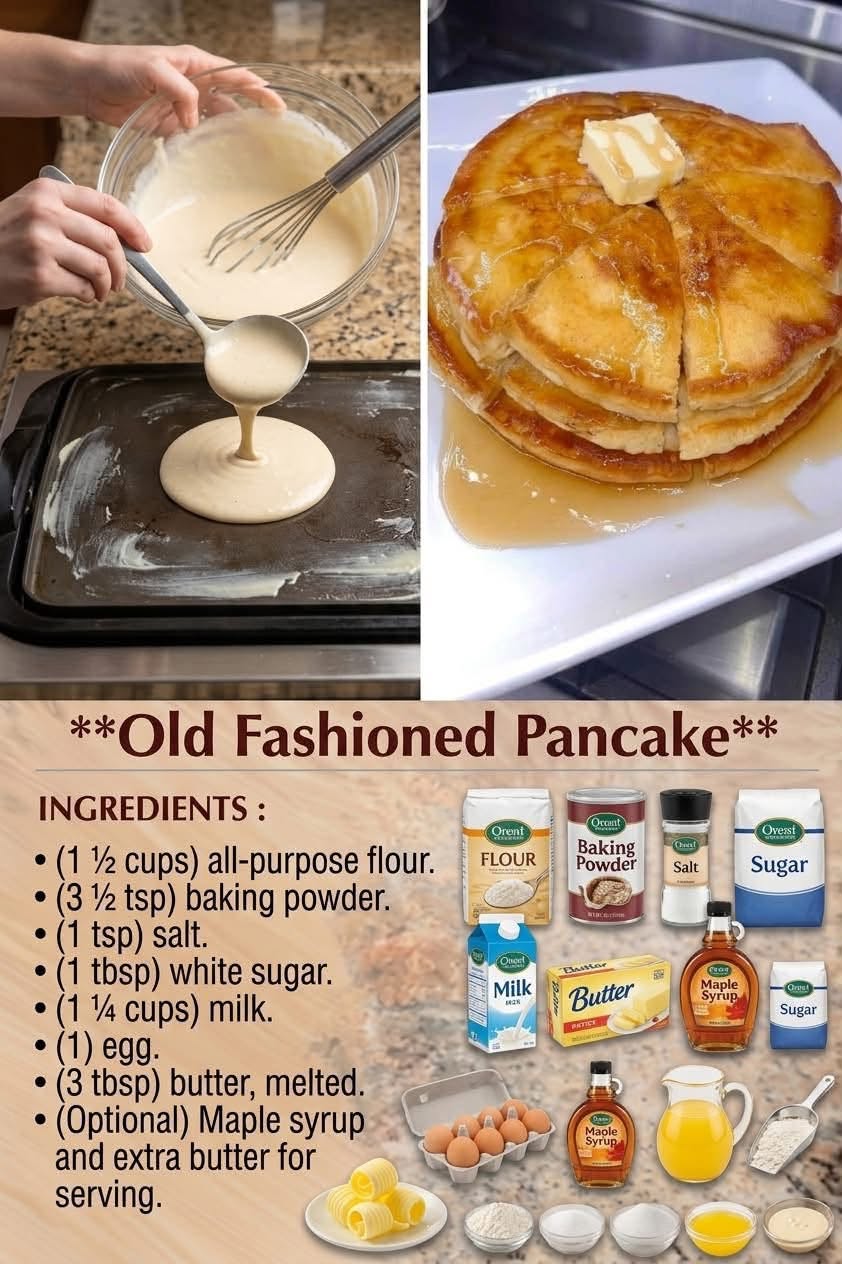
Few breakfasts are as comforting as a tall stack of warm, fluffy pancakes. These Old-Fashioned Pancakes are simple, tender, and wonderfully light, making them an easy choice for a relaxed weekend breakfast or a quick family meal.
Made with everyday pantry ingredients, this recipe doesn’t require any complicated techniques. All-purpose flour, baking powder, sugar, salt, milk, melted butter, and an egg come together to create a smooth pancake batter that cooks into golden rounds with soft, fluffy centers.
The secret to great pancakes is not only the ingredients but also how you handle the batter. Mixing just until the ingredients come together helps prevent the pancakes from becoming tough. A few small lumps are perfectly fine and often result in a more tender texture.
These pancakes are delicious served traditionally with butter and maple syrup, but they also provide an excellent base for fresh fruit, berries, whipped cream, honey, or your favorite toppings. Once you have this basic recipe in your kitchen, you can easily adapt it to suit your family’s preferences.
Ingredients
You only need seven simple ingredients to make a stack of homemade pancakes:
- 1 ½ cups all-purpose flour
- 3 ½ teaspoons baking powder
- 1 tablespoon white sugar
- ¼ teaspoon salt, or more to taste
- 1 ¼ cups milk
- 3 tablespoons butter, melted
- 1 large egg
All-Purpose Flour
All-purpose flour gives these pancakes their classic structure while keeping the finished texture soft. Measure the flour carefully to avoid adding too much, which can make the batter overly thick and the pancakes heavy.
Baking Powder
Baking powder is responsible for much of the pancakes’ rise. When the batter hits the heat, the leavening helps create the light and airy texture that makes a good pancake so enjoyable.
Milk
Milk provides the liquid needed to bring the batter together and contributes to the pancakes’ tender texture. You can use the milk you normally keep in your refrigerator.
Butter
Melted butter adds richness and a pleasant buttery flavor. Allow it to cool slightly after melting so it doesn’t become excessively hot when combined with the egg and milk.
Instructions
1. Combine the Dry Ingredients
Start by adding the all-purpose flour, baking powder, sugar, and salt to a large mixing bowl.
Whisk the dry ingredients together until the baking powder and salt are evenly distributed throughout the flour. This step helps ensure that every pancake receives a consistent amount of leavening.
2. Mix the Wet Ingredients
In a separate bowl, whisk together the milk, melted butter, and egg.
Make sure the melted butter has cooled slightly before adding it to the other ingredients. You want the mixture to be comfortably warm or close to room temperature rather than very hot.
3. Make the Batter
Pour the wet mixture into the bowl containing the dry ingredients.
Gently stir everything together with a whisk or spatula until the flour has been incorporated. Do not overmix the batter. A few small lumps are completely normal.
Overmixing develops the gluten in the flour and can result in pancakes that are less tender. Stop stirring as soon as you have a reasonably uniform batter.
4. Heat the Pan
Place a nonstick skillet or griddle over medium heat and allow it to warm up.
If necessary, lightly grease the cooking surface with a small amount of butter or cooking oil. Avoid using too much because excess fat can cause the pancakes to cook unevenly.
5. Cook the First Side
Pour a portion of batter onto the hot cooking surface. The amount you use will depend on how large you want your pancakes to be.
Allow the pancake to cook without moving it around. After a short time, bubbles should begin appearing across the surface, and the edges should start to look set.
6. Flip the Pancake
Once bubbles have formed and the underside is golden brown, carefully slide a spatula underneath the pancake and flip it.
Cook the second side until it is golden and the center is cooked through. The second side generally takes less time than the first.
7. Continue Cooking
Repeat the process with the remaining batter. Depending on the size of your skillet, you may be able to cook several pancakes at once.
Try not to overcrowd the pan because the pancakes need enough room to cook evenly and be flipped comfortably.
8. Keep the Pancakes Warm
If you’re preparing a large batch, place the cooked pancakes on a plate and keep them warm while you finish cooking the rest.
Stacking the pancakes can also help them retain some of their warmth and moisture.
9. Add Your Favorite Toppings
Serve the pancakes while they are warm. Add a small pat of butter to the top and drizzle with maple syrup for a classic presentation.
You can also add fresh strawberries, blueberries, bananas, honey, powdered sugar, whipped cream, or other toppings you enjoy.
Serving and Storage
These pancakes are best served fresh and warm. A classic combination of butter and maple syrup is all you need for a delicious breakfast.
For a fruit-filled breakfast, top the pancakes with sliced bananas and berries. A little honey or yogurt can also complement the soft, buttery pancakes.
If you have leftovers, allow them to cool completely before storing them. Place the pancakes in an airtight container or resealable food bag and refrigerate them.
For longer storage, pancakes can also be frozen. Arrange them with a sheet of parchment or wax paper between the individual pancakes so they don’t stick together.
When you’re ready to eat them, reheat refrigerated pancakes in a skillet, toaster, or microwave. Frozen pancakes can be reheated directly from frozen using a toaster or microwave, depending on your preference.
Tips for the Best Old-Fashioned Pancakes
Don’t Overmix the Batter
This is one of the most important tips for fluffy pancakes. Stir the batter only until the dry and wet ingredients are combined. A few lumps are better than a completely smooth batter that has been heavily mixed.
Let the Pan Heat Properly
A pan that is too cold can cause the pancakes to spread and cook slowly, while a pan that is too hot can brown the outside before the center is ready. Medium heat is a good starting point, but adjust it according to your stovetop.
Use Fresh Baking Powder
Old baking powder may not provide enough lift. If your pancakes consistently turn out flat despite following the recipe, check whether your baking powder is still active.
Don’t Flatten the Pancakes
Once the batter is in the pan, resist the urge to press down on the pancakes with your spatula. Pressing them can force out some of the air and make them less fluffy.
Wait for the Bubbles
One of the easiest ways to know when a pancake is ready to flip is to watch the surface. When bubbles appear and the edges begin to look set, carefully check the underside for golden-brown color.
Keep the Pancakes Similar in Size
Using approximately the same amount of batter for each pancake helps everything cook at a similar rate. A measuring cup or small ladle can make portioning easier.
Don’t Overcrowd the Pan
Give each pancake enough space to spread and allow yourself enough room to flip it. Cooking in smaller batches can produce more evenly cooked pancakes.
Serve Them Warm
Freshly cooked pancakes have the best texture. If you’re making several batches, keep the finished pancakes warm while you continue cooking.
Cool Melted Butter Before Mixing
Very hot melted butter can interfere with the other ingredients, especially the egg. Let the butter cool slightly before combining it with the milk and egg.
Conclusion
These Fluffy Old-Fashioned Pancakes prove that you don’t need complicated ingredients to make a breakfast everyone will enjoy. With flour, baking powder, milk, butter, egg, sugar, and salt, you can create a stack of soft, golden pancakes right in your own kitchen.
The most important techniques are simple: combine the ingredients gently, avoid overmixing, cook the pancakes over moderate heat, and wait for those telltale bubbles before flipping.
Once they’re finished, serve them with butter and maple syrup or customize them with your favorite fruits and toppings. Whether you’re cooking breakfast for your family or enjoying a quiet morning at home, these classic pancakes are an easy recipe to keep coming back to.
FAQ
Why aren’t my pancakes fluffy?
Overmixing, old baking powder, or cooking at an unsuitable temperature can all affect the texture. Mix the batter gently and make sure your baking powder is still active.
Should pancake batter have lumps?
Yes. Small lumps are perfectly normal. Trying to make the batter completely smooth can lead to overmixing, which may produce tougher pancakes.
Can I make the batter ahead of time?
For the best rise and texture, it is generally better to cook the pancakes soon after preparing the batter. The leavening begins working once the ingredients are combined.
Can I use a different type of milk?
Yes. Different types of milk can be used, although changes in fat and liquid content may slightly affect the texture of the finished pancakes.
Can I add fruit to the pancake batter?
Absolutely. Blueberries, sliced bananas, or small pieces of other fruit can be added to the batter. Add them gently so you don’t overmix the mixture.
How do I know when pancakes are ready to flip?
Look for bubbles forming across the surface and edges that begin to look set. You can also gently lift one edge to check whether the underside has developed a golden-brown color.
Can I freeze homemade pancakes?
Yes. Allow them to cool completely, separate them with parchment or wax paper, and store them in a freezer-safe container or bag.
How do I reheat frozen pancakes?
You can reheat them in a toaster, microwave, or skillet. The toaster is particularly convenient when you want the outside to become slightly crisp while the center stays warm.
Can I make smaller pancakes?
Yes. Simply use less batter for each pancake and adjust the cooking time accordingly. Smaller pancakes are especially convenient for children or breakfast platters.
What is the best topping for old-fashioned pancakes?
Butter and maple syrup are classic choices, but you can also use fresh fruit, berries, honey, powdered sugar, yogurt, or whipped cream.