
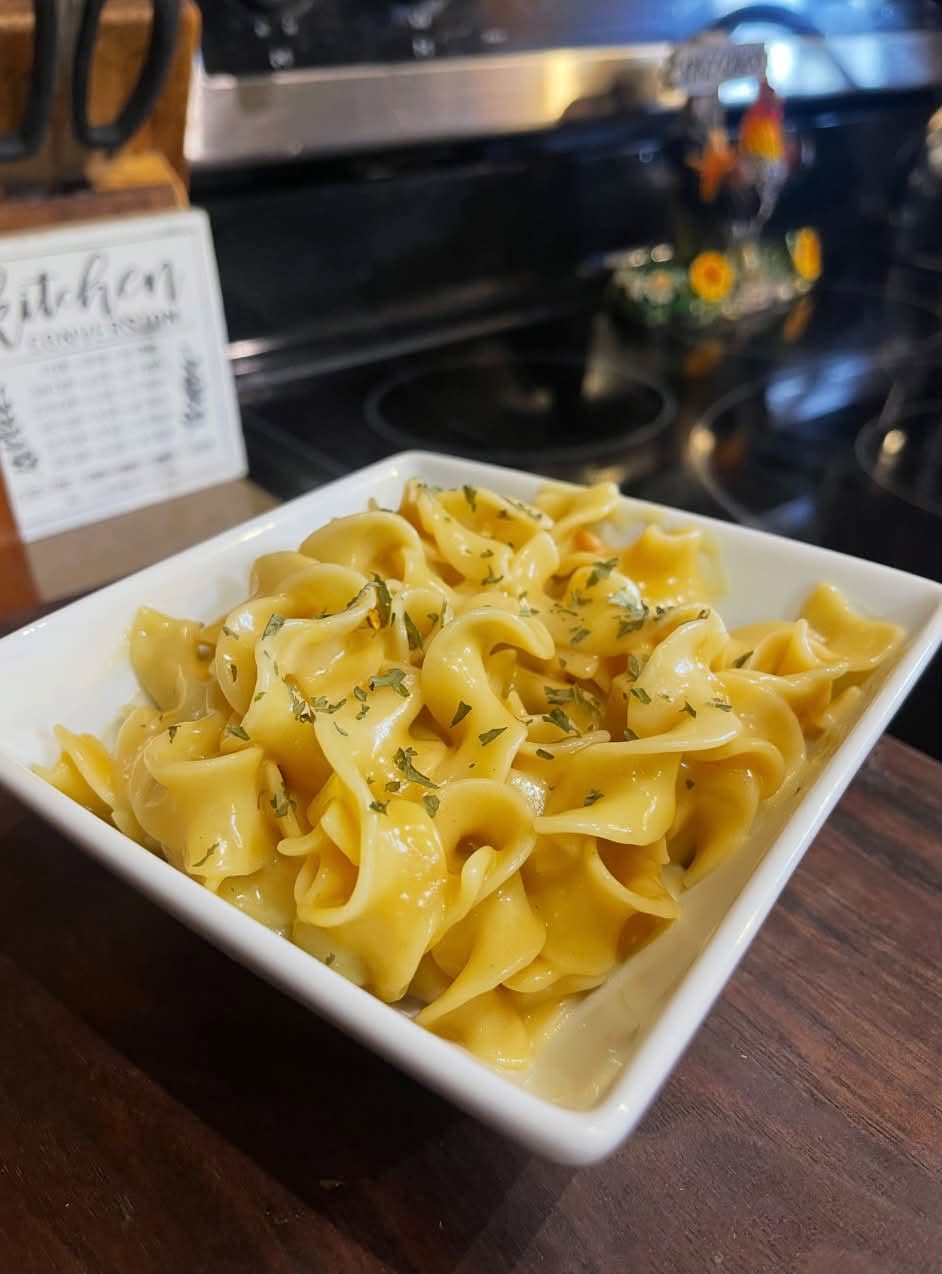
Some recipes are memorable not because they are complicated, but because they are simple, cozy, and remind you of good times. These Cafeteria-Style Creamy Noodles are exactly that kind of dish. Tender egg noodles simmer in a creamy, buttery chicken-flavored broth to create an easy comfort food that is warm, satisfying, and incredibly simple to prepare.
If you remember the creamy noodles often served in school cafeterias or community dining halls, this recipe brings that nostalgic style to your own kitchen. It uses everyday ingredients and requires just one pot, making it an excellent choice when you want something comforting without spending hours cooking.
The secret to the creamy texture is the combination of chicken broth, condensed cream of chicken soup, and butter. The broth gives the noodles a savory foundation, while the soup adds body and creaminess. Butter is stirred in at the end to give the finished noodles a smooth, rich texture.
This recipe is also wonderfully flexible. You can keep it exactly as written for a classic version or adjust the seasoning according to your preferences. A little dried parsley adds color and a subtle herbal note, while black pepper gives the creamy sauce a gentle kick.
Whether you serve these noodles as a quick lunch, a comforting side dish, or part of a family dinner, they are the kind of recipe that can quickly become a regular favorite.
Ingredients
Gather the following ingredients before you begin:
- 4 cups chicken broth or chicken stock
- 1 tablespoon zero-salt chicken bouillon OR 1 chicken bouillon cube
- 1 can (10.5 ounces) condensed cream of chicken soup, low-sodium or regular
- 12 ounces egg noodles
- 4 tablespoons salted butter
- 1 teaspoon dried parsley, optional
- Salt and black pepper, to taste
Chicken Broth
Chicken broth creates the flavorful liquid in which the noodles cook. You can use either chicken broth or chicken stock depending on what you have available. If you are using regular salted broth and a regular bouillon cube, taste before adding extra salt because the combination can already be quite salty.
Chicken Bouillon
Bouillon gives the dish an extra boost of chicken flavor. A zero-salt version gives you more control over the seasoning, while a standard bouillon cube provides additional salt along with its savory flavor.
Cream of Chicken Soup
Condensed cream of chicken soup is responsible for much of the creamy consistency. It also adds a savory chicken flavor that works beautifully with egg noodles.
Egg Noodles
Egg noodles are ideal for this recipe because they cook directly in the creamy broth and have a tender, satisfying texture. Their shape also allows them to hold onto the sauce.
Butter
Salted butter adds richness and gives the finished noodles a smooth, buttery taste. Stirring it in toward the end helps preserve that rich flavor.
Instructions
1. Combine the Chicken Broth and Seasonings
Place a large pot over medium-high heat. Pour in the chicken broth or chicken stock, then add the chicken bouillon.
Whisk the mixture gently to help dissolve the bouillon into the liquid. If you are using a bouillon cube, make sure it has completely dissolved before continuing.
2. Add the Cream of Chicken Soup
Add the condensed cream of chicken soup to the pot. Whisk continuously until the soup blends into the broth and the mixture becomes smooth.
It is normal for the liquid to look slightly thicker and creamier at this stage. Continue whisking until there are no large lumps of condensed soup remaining.
3. Bring the Mixture to a Boil
Increase or maintain the heat as needed and bring the creamy chicken mixture to a gentle boil.
Keep an eye on the pot while it heats because creamy mixtures can bubble quickly. Once the liquid is boiling, you are ready to add the noodles.
4. Add the Egg Noodles
Carefully add the 12 ounces of egg noodles to the pot. Stir immediately so the noodles become coated in the creamy broth and do not stick together.
Reduce the heat to medium and allow the noodles to cook directly in the liquid.
5. Cook Until Tender
Cook the noodles for approximately 10 to 12 minutes, stirring occasionally.
Stirring is important because the creamy mixture can settle on the bottom of the pot. Gentle stirring also helps the noodles cook evenly.
Cooking times can vary depending on the brand and thickness of your egg noodles, so check them toward the end of the suggested cooking time. They should be tender but not mushy.
6. Add the Butter
Once the noodles are tender, reduce the heat to low. Add the four tablespoons of salted butter.
Stir gently until the butter has completely melted and become incorporated into the creamy sauce.
The butter adds a noticeable richness and gives the noodles a smoother, silkier consistency.
7. Season the Noodles
Add the dried parsley if you are using it. Then taste the noodles before adding salt.
Because the chicken broth, bouillon, cream of chicken soup, and salted butter can all contain sodium, you may need little or no additional salt. Add black pepper according to your preference.
8. Adjust the Consistency
Check the consistency before serving. The noodles should be coated in a creamy sauce rather than sitting in a large amount of thin liquid.
If the mixture seems too thin, allow it to sit over low heat for another minute or two while stirring gently. If it becomes thicker than you prefer, a small splash of chicken broth can help loosen the sauce.
9. Serve Immediately
Once the noodles have reached your preferred consistency, remove the pot from the heat and serve them while they are hot.
The dish is at its creamiest immediately after cooking, making it an ideal side dish for a family meal or a comforting bowl for a simple lunch.
Serving and Storage
These creamy noodles can be served as either a side dish or a simple main meal. They pair particularly well with roasted chicken, baked chicken, meatloaf, grilled beef, or roasted vegetables.
For a classic comfort-food dinner, serve the noodles alongside roasted chicken and green beans. The creamy noodles also work nicely with a simple salad to balance the richness of the dish.
If you want to turn them into a more substantial meal, you can add cooked shredded chicken, leftover turkey, or another cooked protein.
Store leftover noodles in an airtight container in the refrigerator. The sauce will naturally thicken as it cools, so the texture may be different the next day.
When reheating, add a small splash of chicken broth or milk and warm the noodles gently. Stir occasionally until the sauce becomes creamy again and the noodles are heated throughout.
Avoid overheating the noodles because prolonged high heat can make the sauce overly thick and may cause the noodles to become soft.
Tips for the Best Cafeteria-Style Noodles
Choose Egg Noodles
Egg noodles give this recipe its familiar texture and shape. They cook directly in the broth and absorb some of the savory flavor as they soften.
Watch the Salt
This recipe includes several ingredients that may contain sodium. If you use regular chicken broth, a standard bouillon cube, condensed soup, and salted butter together, taste the dish before adding additional salt.
Stir While the Noodles Cook
Because the noodles cook in a creamy liquid rather than plain water, occasional stirring is important. It helps prevent sticking and ensures that the sauce remains evenly distributed.
Don’t Overcook the Noodles
Start checking the noodles near the end of the recommended cooking time. Once they are tender, move on to the butter and seasoning steps. Overcooking can result in a mushier texture.
Add the Butter at the End
Adding butter after the noodles are cooked gives the dish a rich, buttery finish. Stir until the butter is completely melted before serving.
Adjust the Thickness
The consistency can change depending on the noodles, cooking time, and heat. If your noodles are too thick, add a small amount of broth. If they are too loose, let them simmer briefly while stirring.
Use Freshly Ground Pepper
Black pepper adds a simple but effective contrast to the creamy sauce. Freshly ground pepper can provide a more noticeable flavor than pre-ground pepper.
Add Parsley for Color
Dried parsley is optional, but it adds small flecks of green that make the creamy noodles look more appealing. It also contributes a mild herbal flavor.
Serve Them Hot
The sauce is generally at its smoothest and creamiest immediately after cooking. If you are serving the noodles to guests, try to finish them shortly before everyone sits down to eat.
Conclusion
These Old-Fashioned Creamy Cafeteria Noodles are proof that a simple recipe can create a truly comforting meal. With tender egg noodles, savory chicken broth, creamy condensed soup, and plenty of buttery richness, every bite delivers the cozy flavor many people remember from classic cafeteria-style dishes.
The recipe is easy enough for a busy weeknight and versatile enough to serve alongside many different main dishes. You only need one pot, a few everyday ingredients, and around a few minutes of active preparation.
Whether you are making them for a family dinner or simply craving something warm and comforting, these creamy noodles are an easy choice. Serve them fresh and hot, add your favorite protein or vegetables if desired, and enjoy a bowl of nostalgic comfort food from your own kitchen.
FAQ
Can I use chicken stock instead of chicken broth?
Yes. Chicken stock works well in this recipe and can provide a rich savory base for the creamy noodles.
Can I use regular bouillon instead of zero-salt bouillon?
Yes. You can use one regular chicken bouillon cube instead. Since regular bouillon can contain quite a bit of sodium, taste the noodles before adding extra salt.
Can I use another type of pasta?
Egg noodles are recommended because they provide the classic texture and appearance, but you can experiment with other pasta shapes. Keep in mind that different pasta varieties may require different cooking times and amounts of liquid.
Why did my noodles become too thick?
Noodles continue absorbing liquid as they cook and cool, which can make the sauce thicker. Add a small splash of chicken broth or milk while reheating to loosen the consistency.
Can I add cooked chicken?
Absolutely. Shredded or diced cooked chicken can turn these noodles into a more substantial one-pot-style meal.
Can I add vegetables?
Yes. Cooked peas, carrots, mushrooms, broccoli, or other vegetables can be mixed into the finished noodles for additional flavor and texture.
Can I make these noodles ahead of time?
You can prepare them ahead, but they are best when served shortly after cooking. The noodles absorb more liquid as they sit, so the sauce may become considerably thicker.
How do I reheat creamy noodles?
Reheat them gently over low to medium-low heat or in the microwave. Add a small splash of chicken broth or milk and stir until the sauce becomes creamy again.
Can I freeze creamy noodles?
Freezing is generally not ideal for this dish because the noodles and creamy sauce can change texture after thawing. For the best quality, refrigerate leftovers and enjoy them within a few days.
What can I serve with creamy noodles?
They pair well with roasted chicken, meatloaf, grilled meats, green beans, roasted vegetables, salads, and many other classic comfort-food dishes.
Can I make the recipe less salty?
Yes. Choose low-sodium chicken broth and low-sodium cream of chicken soup, and use zero-salt bouillon if available. Taste before adding any additional salt.
Why should I cook the noodles directly in the broth?
Cooking the egg noodles directly in the creamy chicken mixture allows them to absorb some of the savory flavor while also helping the sauce develop its characteristic thick, comforting consistency.