
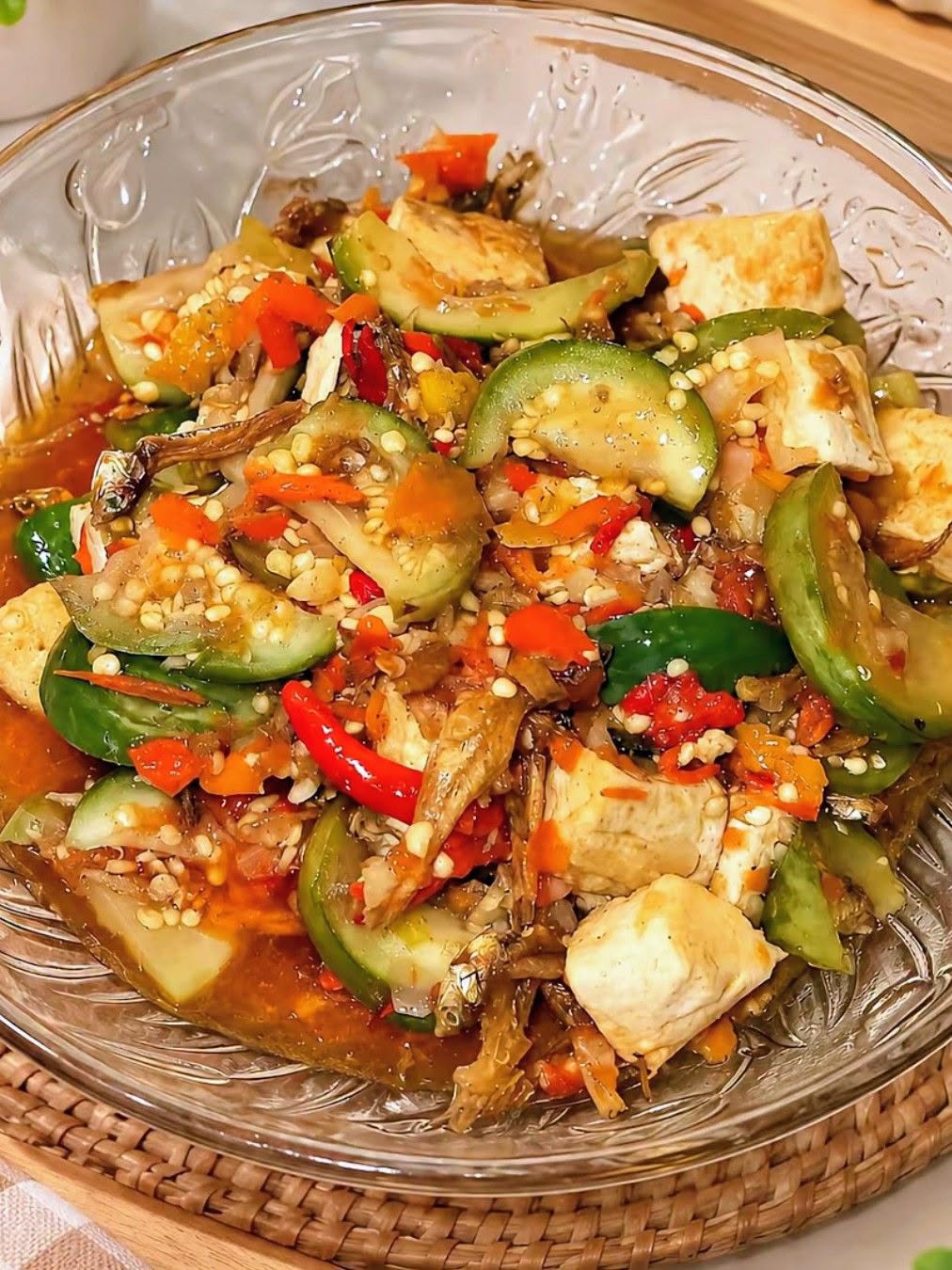
This Spicy Eggplant, Tofu & Anchovy Sambal is a bold and comforting dish packed with savory, spicy, and slightly sweet flavors. Tender eggplant and golden pieces of tofu are coated in a fragrant homemade chili sambal, while rinsed anchovies add a deep umami flavor that makes every bite incredibly satisfying.
The homemade spice paste brings together shallots, garlic, red chilies, bird’s eye chilies, and tomatoes. Once cooked, these ingredients create a rich and aromatic sauce that pairs beautifully with the soft texture of eggplant and crispy-edged tofu.
Serve it with freshly steamed rice for a simple but flavorful meal that works just as well for lunch as it does for dinner.
Why You’ll Love This Dish
- Big, bold flavor: The combination of chilies, garlic, shallots, tomatoes, and anchovies creates a deeply savory sambal.
- Great texture: Soft eggplant contrasts beautifully with golden tofu and the flavorful sambal.
- Easy homemade spice paste: Everything comes together from fresh ingredients.
- Perfect with rice: The spicy sauce is especially delicious spooned over warm steamed rice.
- Customizable heat: Adjust the amount of bird’s eye chili to suit your preferred spice level.
Ingredients
For the Main Dish
- 250g round eggplants, cut into bite-sized pieces
- 4 blocks of tofu, cut into pieces
- 1 handful of anchovies, rinsed
- Salt, to taste
- Powdered stock, to taste
- A little sugar, to balance the flavors
- 2 lime leaves, optional
For the Spice Paste
- 5 shallots
- 3 cloves garlic
- 5 curly red chilies
- 10 bird’s eye chilies
- 2 tomatoes
How to Make Eggplant, Tofu & Anchovy Sambal
1. Prepare the Ingredients
Start by washing the eggplants and cutting them into manageable pieces. If your eggplants are small and tender, the skin can be left on. Keeping the pieces relatively similar in size will help them cook more evenly.
Cut the tofu into bite-sized pieces. Pat the tofu gently with paper towels to remove excess moisture. This helps it brown more effectively during cooking.
Rinse the anchovies thoroughly and drain them well. This helps remove excess salt or surface residue before they are added to the dish.
2. Make the Spice Paste
Combine the shallots, garlic, curly red chilies, bird’s eye chilies, and tomatoes in a blender, food processor, or mortar and pestle.
Grind or blend the ingredients until you have a coarse or fairly smooth paste, depending on the texture you prefer. A slightly coarse paste gives the finished sambal a rustic homemade character.
Be careful when handling fresh chilies, especially bird’s eye chilies. Avoid touching your eyes or face after cutting them, and wash your hands thoroughly afterward.
3. Cook the Tofu
Heat a little cooking oil in a large skillet or frying pan over medium heat. Add the tofu pieces and cook until the outside becomes lightly golden and firm.
Turn the tofu occasionally so several sides develop a little color. Once browned, transfer it to a plate and set aside.
You don’t need to make the tofu extremely crispy. The goal is simply to create a lightly browned exterior that will hold up well when combined with the sambal.
4. Cook the Eggplant
Add a little more oil to the pan if needed, then add the eggplant pieces. Cook until they begin to soften and develop lightly browned edges.
Eggplant absorbs oil quickly, so avoid adding a large amount at once. Cook over moderate heat and stir occasionally until the pieces are tender.
Once cooked, set the eggplant aside with the tofu.
5. Fry the Anchovies
Using the same pan, add the rinsed and drained anchovies. Cook them briefly until they become fragrant and lightly browned.
The anchovies provide an important savory depth to the sambal. Because they can already contain a considerable amount of salt, wait before adding additional salt to the dish.
6. Cook the Spice Paste
Add the freshly prepared spice paste to the pan with the anchovies. Stir well and cook over medium heat.
Allow the paste to cook slowly rather than rushing this step. Stir frequently so the mixture cooks evenly and doesn’t stick to the bottom of the pan.
As the paste cooks, its raw chili and onion aroma will mellow and become richer. Continue cooking until the mixture smells fragrant and looks well combined.
7. Add the Lime Leaves
If using lime leaves, add the two leaves to the sambal while it cooks. Lightly tear or bruise them first to help release their citrusy aroma.
The lime leaves are optional, but they add a fresh fragrance that works particularly well with the spicy chili mixture.
8. Season the Sambal
Add a little sugar, powdered stock, and salt as needed. Mix thoroughly and taste carefully.
The goal is to balance several flavors: spicy chilies, savory anchovies, aromatic shallots and garlic, acidity from the tomatoes, and a small amount of sweetness.
Add salt gradually because both the anchovies and powdered stock may already contribute saltiness.
9. Combine Everything
Return the cooked eggplant and tofu to the pan. Gently stir everything together so the sambal coats the vegetables and tofu evenly.
Continue cooking for a few minutes over low to medium heat. This gives the tofu and eggplant time to absorb the flavors of the sambal.
Try not to stir too aggressively, as the eggplant will be soft and can break apart easily.
10. Taste and Serve
Taste the finished dish and make any final adjustments to salt, sugar, or spice. Remove the lime leaves before serving if you prefer.
Serve the sambal hot alongside freshly cooked rice. The combination of fluffy rice and spicy, savory sambal makes this a wonderfully satisfying meal.
Tips for the Best Sambal
Adjust the Chili Level
Ten bird’s eye chilies can create a very spicy dish. If you prefer milder food, reduce the number of bird’s eye chilies and increase the curly red chilies instead.
For an especially spicy version, keep the chili seeds. For less heat, remove some or all of the seeds before blending.
Don’t Rush the Spice Paste
Allowing the spice paste enough time to cook is one of the most important parts of the recipe. Properly cooked sambal develops a deeper aroma and smoother flavor than paste that is only briefly heated.
Drain the Tofu Well
Excess water on tofu can cause splattering when it hits hot oil and can prevent the surface from browning properly. Patting it dry before cooking makes a noticeable difference.
Be Careful With Salt
Anchovies and powdered stock can both be salty. Season the dish gradually and taste before adding more salt.
Choose Firm Tofu
Firm or extra-firm tofu works particularly well because it is less likely to fall apart when fried and mixed with the sambal.
What to Serve With It
This dish is naturally suited to rice-based meals. Serve it with a generous portion of freshly steamed white rice to balance the spicy sambal.
You can also build a larger meal by serving it alongside simple vegetables, cucumber slices, steamed greens, or another mild side dish.
- Steamed white rice
- Brown rice
- Cucumber slices
- Steamed vegetables
- Simple vegetable soup
- Fresh herbs or sliced scallions
Storage Instructions
Allow leftovers to cool before transferring them to a clean airtight container. Refrigerate promptly and use within a few days.
When reheating, warm the dish gently in a skillet or microwave until heated through. If the sambal has thickened considerably in the refrigerator, a small splash of water can help loosen it.
For the best texture, avoid repeatedly reheating the entire batch. Instead, heat only the portion you plan to eat.
Easy Variations
Less Spicy Version
Reduce the bird’s eye chilies and use more curly red chilies. This keeps the vibrant red color and chili flavor while lowering the heat.
Extra Crispy Tofu
For a crispier texture, cook the tofu for a little longer before combining it with the sambal. Add it near the end of cooking so it retains more of its exterior texture.
More Eggplant
If you love eggplant, increase the amount and adjust the seasoning accordingly. Smaller pieces will absorb more of the sambal and become especially flavorful.
Fresh Citrus Finish
For a bright finishing note, serve with a small wedge of lime on the side. A squeeze just before eating can add a refreshing contrast to the rich, spicy sambal.
Frequently Asked Questions
Can I use a different type of eggplant?
Yes. Different varieties can work in this recipe. Choose eggplants that are fresh and firm, and adjust the cooking time according to the size of the pieces.
Can I make this dish less spicy?
Absolutely. The easiest way is to reduce the bird’s eye chilies. You can also remove the seeds and membranes from some of the chilies before blending.
Can I use canned tomatoes?
Fresh tomatoes are ideal for the spice paste, but canned tomatoes can work as a substitute when necessary. Since canned tomatoes contain more liquid, allow the sambal enough time to cook down.
Do I have to use lime leaves?
No. Lime leaves are optional. They add a fragrant citrus note, but the sambal will still be flavorful without them.
Why are my eggplants too oily?
Eggplant naturally absorbs oil quickly. Cooking it over moderate heat and using only enough oil to coat the pan can help. You can also cook the eggplant separately and drain it briefly before combining it with the sambal.
Can I prepare the spice paste ahead of time?
Yes. The spice paste can be prepared ahead and kept refrigerated in a sealed container until you’re ready to cook. Preparing it in advance can make this dish much faster to assemble.
Final Thoughts
This Eggplant, Tofu & Anchovy Sambal is a fantastic choice when you want something packed with flavor without needing an elaborate list of ingredients. The soft eggplant, satisfying tofu, savory anchovies, and fiery homemade chili paste create a dish that is both comforting and exciting.
Serve it over hot rice, adjust the chili level to your taste, and let the sambal do the work. Whether you’re cooking for yourself or preparing a flavorful family meal, this recipe is one worth adding to your regular rotation.